Summary: Everything has changed. Our outreach had to pivot, and now we’re closer to what I had originally thought we would be like. It’s turned urban, with unpredictable violence. We’re outgrowing the hole in the wall, and I’m about to take on a ton of debt without revenue. Yeah, buckle up. This is going to be quite the ride.
Read Time: 12 minutes
I haven’t written in a while because, honestly, things have been moving so fast that it’s been hard to find a place to land in my writing.
Let me explain.
We had been desperately looking for Melanie. We inquired among the community living outside about her, and the best news we collected was that she had been seen by more than one person.
A couple of weeks earlier, we posted her picture on social media, with her consent, to share her story. Almost immediately, a family from far away reached out to us with a message. They wanted us to tell her, “She is loved and her daughter needs to hear her voice.”
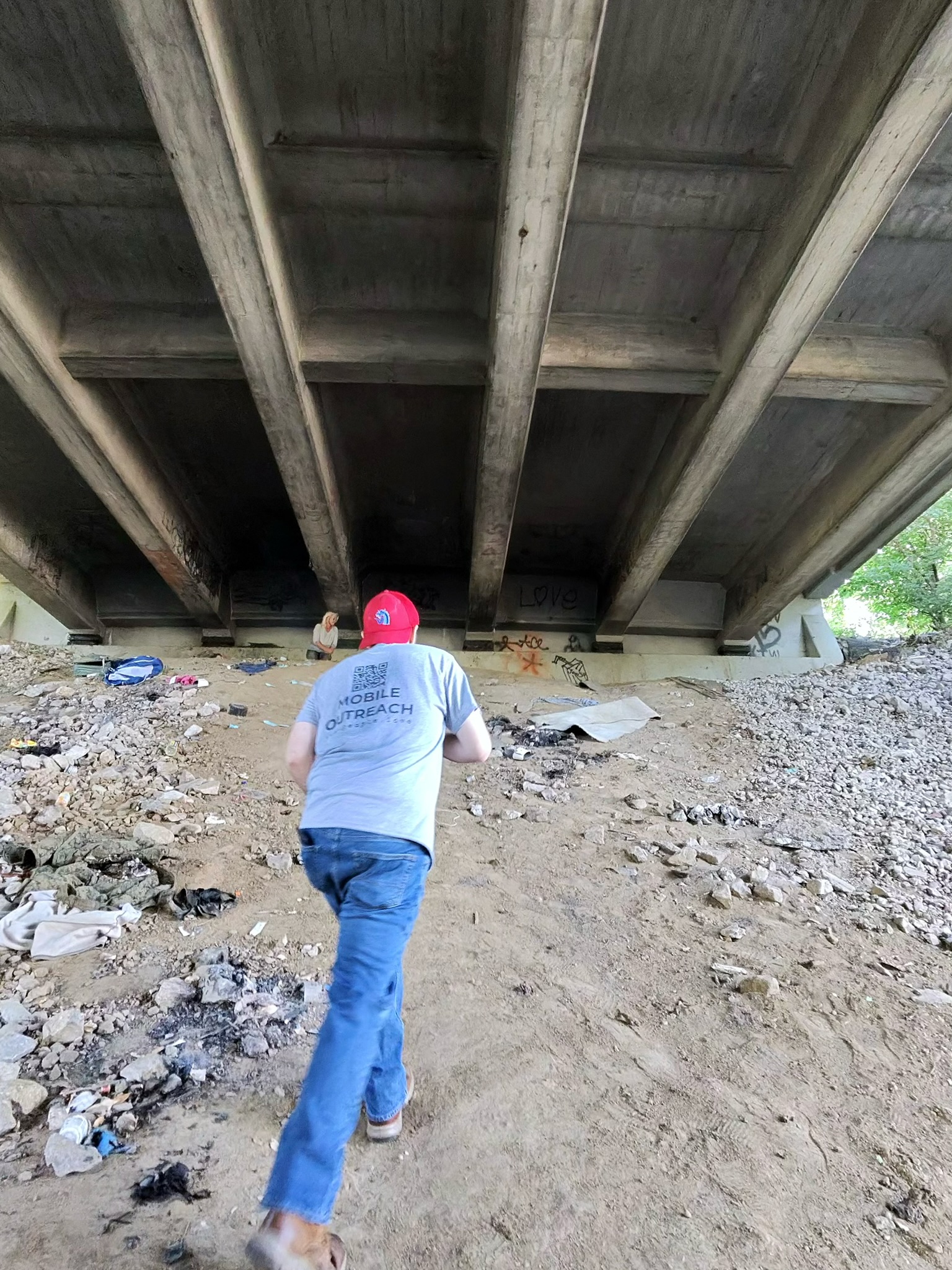
We eventually found her under a secluded overpass. Difficult to get to on purpose. She burrowed as far up under it as she could. The ground was harder than concrete and covered with a thick layer of dust, as if you were on the moon. No moisture had been there for at least a couple of decades.
Because she chose that spot, the dust saturated her jeans, socks, and one formerly bright tie-dyed bag. Overhead, thick concrete beams were covered in spray paint, one with an ominous message: “None of this Shit Is Worth your Life.”
I made a call and handed her the phone. Daughter and Mom connect after who knows how long. We sit there and listen to them talk about how the kids are doing in school. How someone is dating someone, and it’s getting serious. Mom feels sorry for being broken and not staying present; daughter tells her, “None of that matters.”
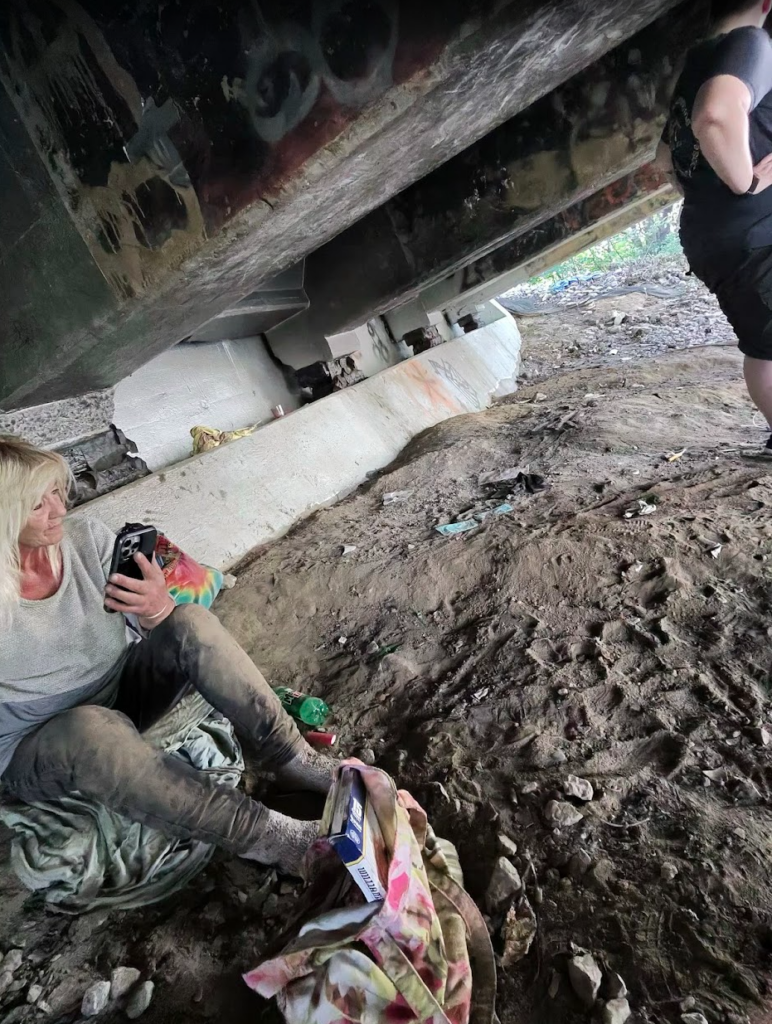
A phone call.
Mom says, “I can’t let you kids see me like this.” And that was the end of the conversation.
I think when Melanie said what she was feeling out loud, it was a breaking point, and for right then it was enough.
And for me, crawling to someone burrowed up in a concrete fortress with a phone had less to do with my willingness to do it and more with how doing so changes me.
Nothing about what we did before looks like what we do now.
Before, going out meant once a month, with trailers overloaded with provisions like food, hygiene supplies, and everything you would need to live outside.
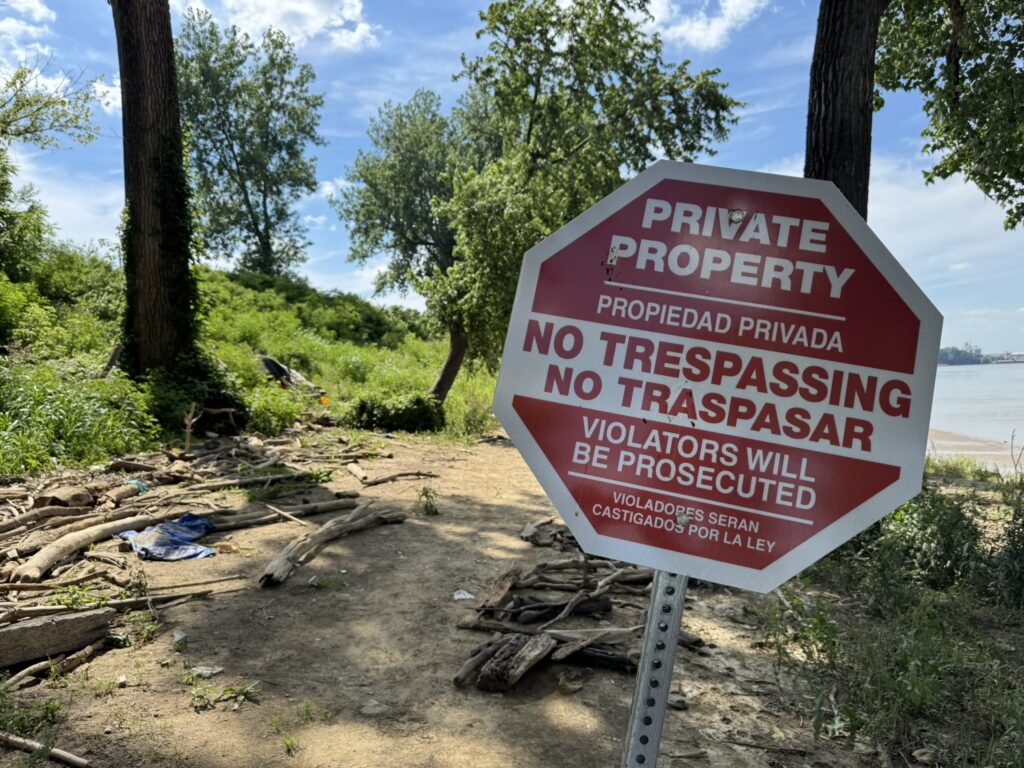
It was two stops. One was a camp the property owner has since forcibly removed.
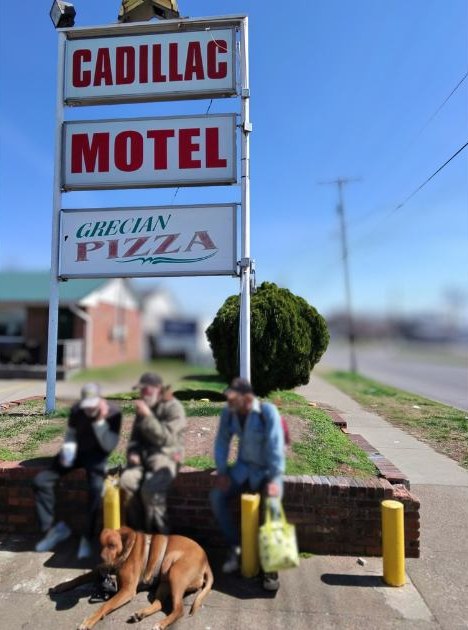
The other, the Cadillac Motel.
It was simple. In and out. Once a month. Now, looking back, we were conveniently keeping that world at arm’s length. Rinse and repeat.
Clearing the camp scattered the people who lived there across the city, and it left a huge void in our outreach.
And if I were honest, it also left a void in me. I didn’t realize how much I needed that until it was gone. The adventure of putting on my boots and traveling a maze of trails through the woods to be welcomed by our people had become a part of me.
I need a homeless crisis to continue to feel purpose, which is pretty messed up when you think about it.
So, we had to pivot.
Here’s how it works now. Once a week, we find people living under overpasses, in parks, in broken vehicles, between buildings, and in wooded areas.
Instead of a convoy, we pull one trailer behind one truck. We retrofitted it with shelving to serve fewer people with a larger variety of supplies.
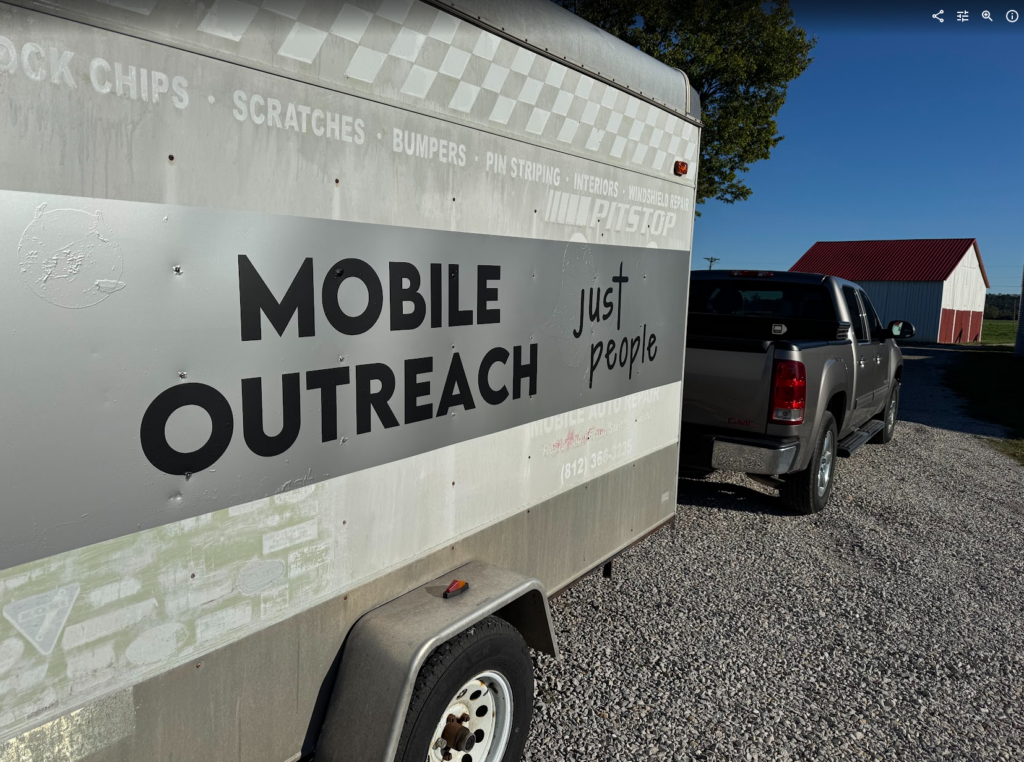
It’s turned urban. Not what I am accustomed to, but the hurt and humiliation are uncomfortably familiar.
The person that nobody wants to have anything to do with is the same; we’re at a park bench instead of the side of the river. Two very different places that come with a different set of rules.
The opportunities for violence are different here, too. While we have walked up on numerous verbal altercations that were on the edge of becoming physical, there’s one that stands out.
One Tuesday we were handing out sandwiches when a couple of men popped out of a vehicle and began beating another man who was walking toward us. They drove off, leaving him on the ground.
Given how he had been kicked, I assumed the worst and instinctively went after him, which, in retrospect, might not have been the best idea.
He unexpectedly jumped up in a defensive posture. Ready to fight, filled with rage and flowing with blood.
Then he staggered off.
He was hurt, but nowhere near as badly as I first thought. And from the look on his face, I didn’t get the impression he was going somewhere to lick his wounds.
He looked like he was going to settle a score.
And that’s one of the things I’m beginning to understand out here. Sometimes you don’t know where the fight started. You don’t know what happened yesterday, who owes who, or who did what to whom.
You just happen to be standing there when the next round begins.
Chris, my right-hand guy out in the field, and I had heard rumors amongst our people that Tent City had been repopulated. Although I thought it was unlikely, as I had found the place abandoned back in June.
Chris had not been there with me before. With his ability to notice subtle things, like a bent twig or spider webs over a path, I was anxious to get his take. So, I jumped at the opportunity.
Imagine what it would look like if our town had been abandoned for a very long time. We’ve seen apocalyptic movies that depict nature reclaiming society. That’s what Tent City looks like today.
The trail is still there if you remember where to step. Otherwise, blades of tall grass tower over our shoulders. The brush is thick, and as you walk through it you become aware of the hundreds of thorns that become embedded in your pants.
If you’re not wearing pants, it’s going to get uncomfortable.
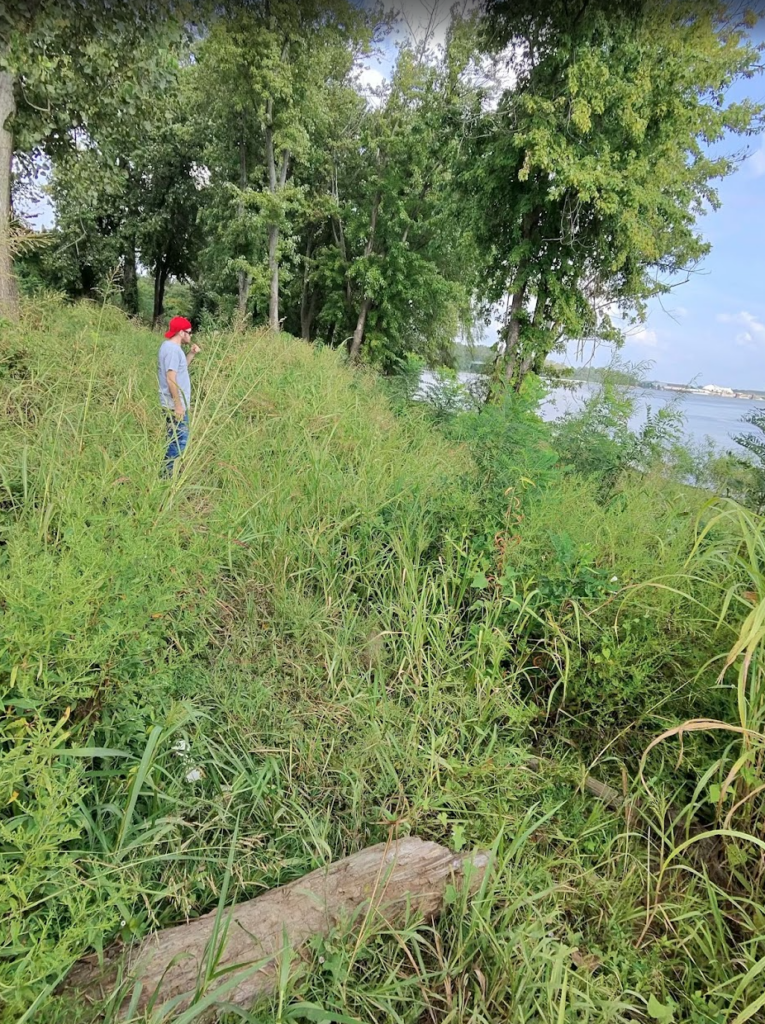
Chris doesn’t see anything. I see a friend of ours who lived there help me cross a ravine on a shaky makeshift bridge. I see where tents were and a pot over an open fire. I see the trees where a hammock once hung, and where laundry used to hang from ropes stretched between them.
I stood there, and just kind of took it all in. A community of people once lived together. For better or for worse. Now it’s all gone. And I see Chris standing there in the middle of this and realize the finality of that chapter of our outreach.
The next chapter weighs much heavier on my shoulders. Before, it was simpler. We just dropped a wide spectrum of provisions once a month, kind of like a bomb.
Now I find myself flipping through pictures on my phone of people I have met out in the wild, trying to match names to faces. I have a map with pins, reminding me where people are now. If I don’t make a record of that, I won’t remember the details I need to.
Often, Chris and I drive around town checking on places where people once lived, only to find nobody home or the spot now abandoned.
We will go back, repeatedly. Chris and I find new trails: people living in cars, bouncing from parking lot to parking lot; people living in public parks, under tarps. Panhandling wherever traffic comes to a brief stop. We’re there, regardless of how miserable the weather is.
Michael lives at the Cadillac. Often, when we were there at the end of the month with our outreach, I would take him a plate of food since he obviously wasn’t going far. But I never really paid much attention to him. He kind of blended in. It wasn’t unusual for people with disabilities to be sitting outside their rooms there, as if waiting for a crumb to fall from the table.
One Tuesday, he was sitting there, as usual, and I stopped and gave him some instant meals. He started to weep. Without a thought, I got down on my knees to hug him. But he raised his hands to signal stop. “You don’t want to touch me,” he said shamefully.
I hugged him anyway and held him as he cried, reassuring him that God loved him and he was worth it. For the first time in a long time, what I was doing felt biblical again.
Since then, thanks to some collaboration with an agency, he’s got his birth certificate and is well on his way to some actual housing. And we found him a wheelchair with rubber on the tires, instead of the bare metal rims he was dragging himself around on.
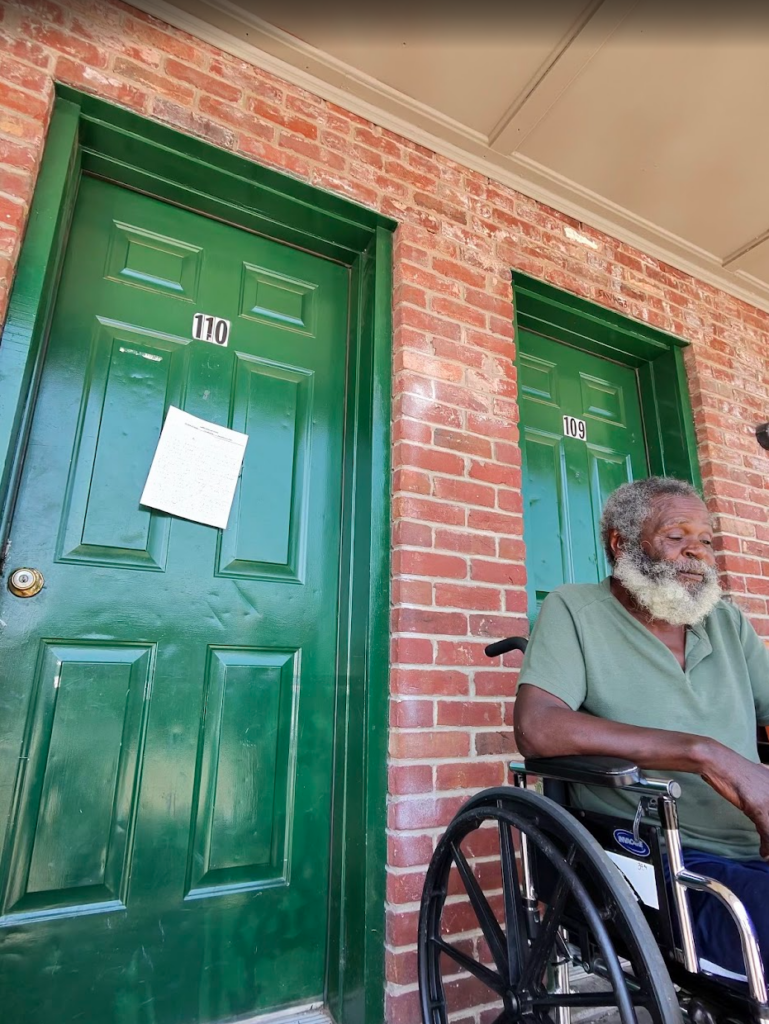
Yet, some Tuesdays I still find him beside a convenience store, out of money until his next check comes. One time I sat on the ground in front of his wheelchair and asked where he would sleep that night. He looked me in the eyes the way someone who loves you does. “I’ll be fine, David. Don’t worry about me.”
Don’t worry? There’s someone sitting next to me fidgeting with a baggie of drugs, which I’m later told is an eight ball. People are drinking from open containers. A bag of apples and trash at our feet are attracting a swarm of flies.
Stephen and Brittany. We had a scheduled meeting behind a building one Tuesday morning to deliver everything they needed to live outside. I splurged and purchased an expensive tent (which got me in some trouble) and a couple of new pillows.
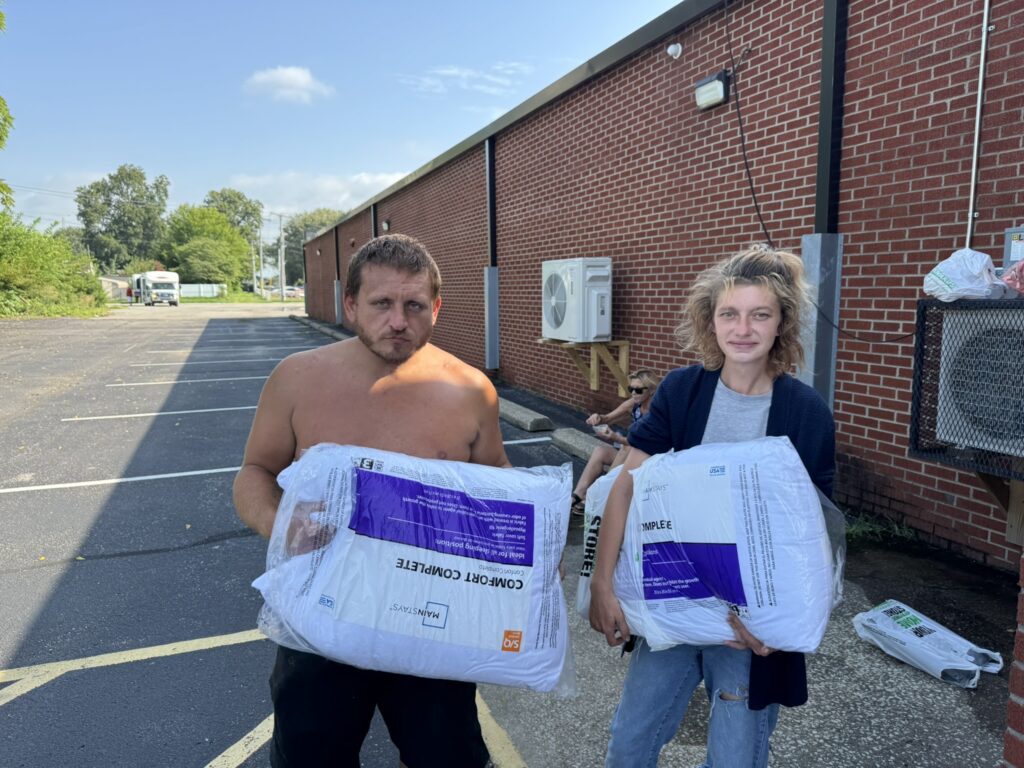
When I handed her that pillow, that was the first time I had ever seen her smile. They got tarps, one to go under the tent, another over it, with rope and stakes to secure it all.
Sleeping bags and blankets sound like a bad idea in July. But however you cover it up, you will feel the effects of that ground in your hips, shoulders, and ribs come morning time.
Flashlights and batteries. Bug repellent, nonperishable food, body wipes, hygiene supplies, and a new wagon to haul it all around with.
Now it’s September. We caught up with them at a public park that was a popular hangout for those living outside, until recently. All they had were the clothes they were wearing.
They asked for it all again. It forced me to say something I would not have otherwise said. “No.” And that stung, because I knew I had it all, including a tent in the back of our trailer. All I had to do was hand it to them.
But we have a policy. One tent every three months.
Inside, it’s a struggle for me. We have- why do we not give?
Ironically, Stephen and Brittany accepted my answer without an argument and moved on. I don’t know why that bothered me so much. Had it been me, I think I would have been on my knees begging for that tent.
Melanie. We caught up with her once again. This time I left her alone with my phone, and she had what looked from a distance like a good conversation with her daughter.
A few days later, I got a message from that same daughter informing me that Melanie was in the hospital. She had been beaten by a man and a woman, possibly over a sandwich.
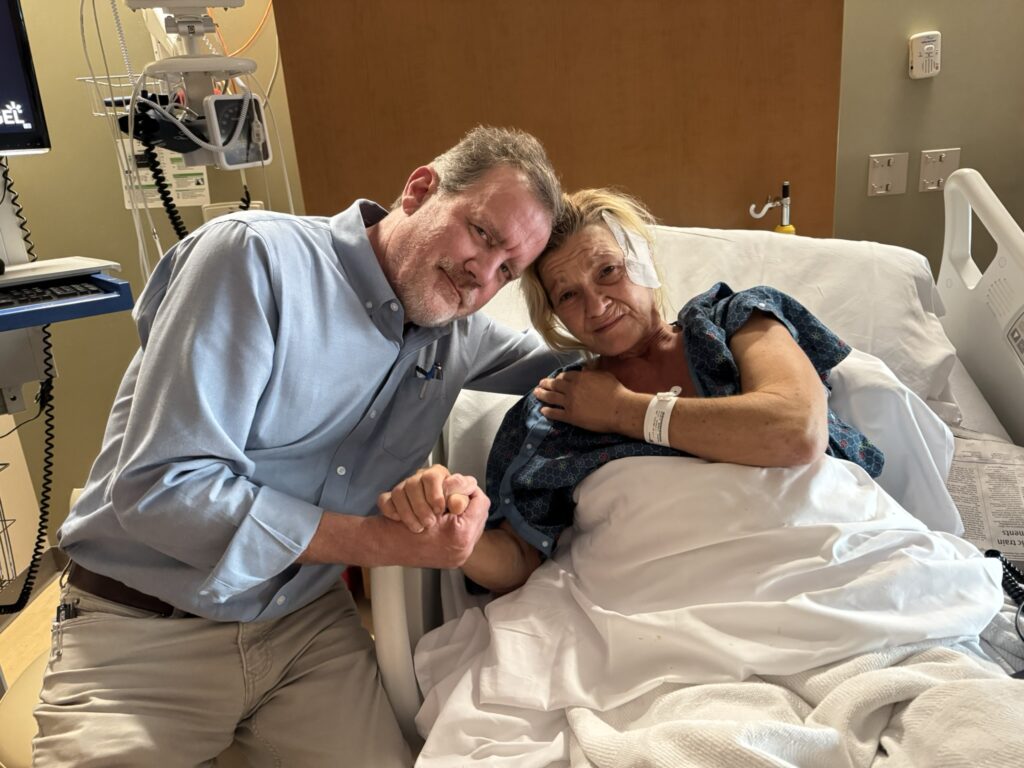
Melanie was finally getting the care she needed.
I went to visit her. During her hospitalization, doctors discovered a serious brain tumor. That moment under the overpass made sense now.
Family was on their way from Chicago to pick her up at discharge. She would see her children and grandbabies. It was tough for her because she had fought so hard not to become a burden to her family.
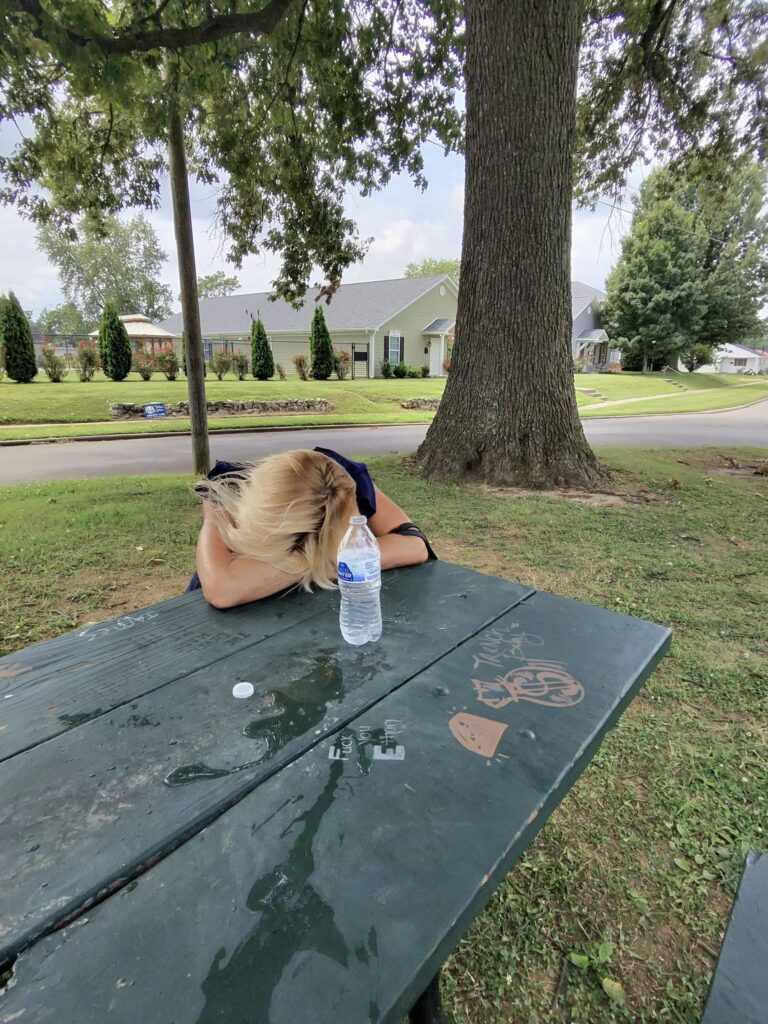
It’s easy to look at someone like Melanie sitting on a park bench and assume she’s just another homeless person who needs to get it together and find a job. But how could anyone looking at her possibly know what was happening inside her? She didn’t even know herself.
I started doing outreach because it was what I was supposed to do for others. With the way things are developing in our outreach, it’s beginning to look the other way around. It’s changing who I am.
Fast forward to November, and once again, my Savior seems to have brought me to another difficult fork in the road. Our outreach is bursting at the seams, working out of the hole in the wall in the back of my computer repair business. So, a new location has been placed in our path.
In earthly terms, this makes absolutely no sense. I am about to take on a financial commitment that would have been unimaginable when we started, and we don’t have a dependable stream of funding to support it. No guaranteed grants. No wealthy benefactors waiting in the wings. We’re Just People, not the United Way.
But that’s what’s happening. Stepping out in faith feels like walking into traffic blindfolded, with foam stuffed into your ears.
We started out serving twenty meals out of the back of my wife’s car. And now we’re about to open shop and pay someone to run it with funds we don’t have. What could go wrong?
Matthew 25:45 “Truly I say to you, to the extent that you did not do it to one of the least of these, you did not do it to Me.”
Thanks, Dad. For the nudge. Again.
0 Comments