Summary: We take a look at the dark side of outreach. Sometimes you give till it hurts, and it’s still not enough. And in the end, the people in the camp will likely be displaced again.
Read Time: Seven Minutes
Most of the time when I sit down to write like this, I have an aim. I want you to see something about the people living outside that you might not otherwise notice. Maybe even feel differently about. If you want to call it storytelling, that’s probably fair. I usually paint a picture.
But it’s usually aimed at something that ends warm and fuzzy. This won’t be that.
This is a raw look at the part of outreach that doesn’t photograph well.

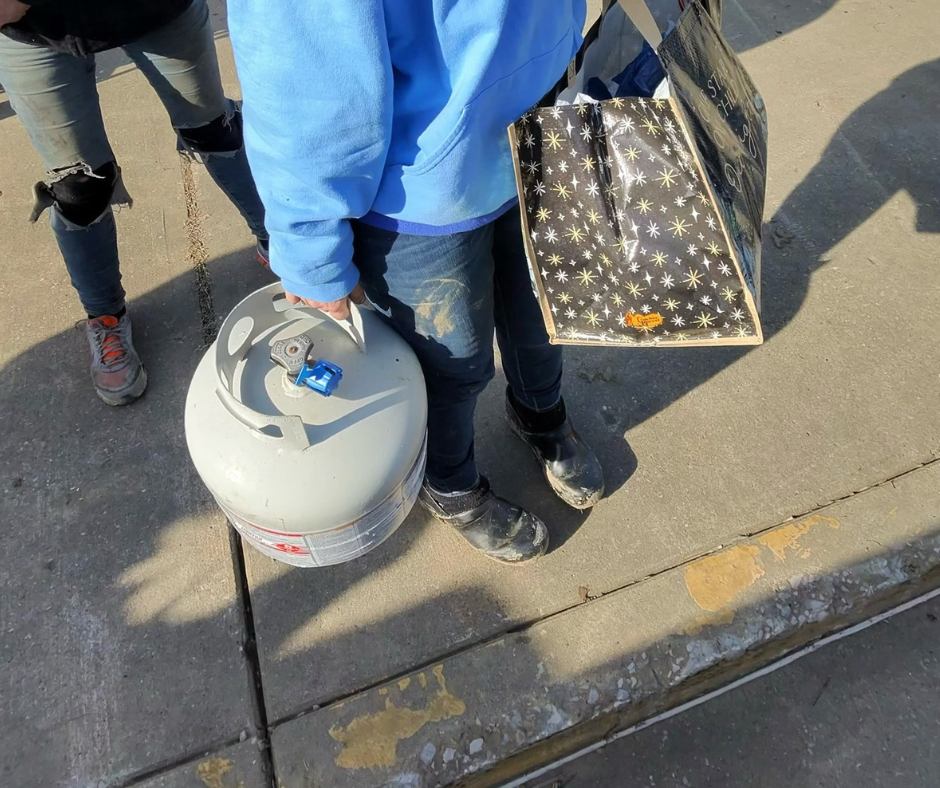
Late Christmas afternoon, my wife and I drove back to camp to pick up five empty propane tanks. We’d already been there earlier that day. I’d promised a man that if he could get them close to the road, I’d swing back by with my truck before we left town. I forgot until we were home. So, we drove back toward town. By the time we got back, it was getting dark.
The plan was simple: roll in, grab the tanks, and leave without being seen. That didn’t happen.
On our way out, someone on the side of the road motioned for us to stop. I assumed it was a resident. My wife told me it wasn’t. She was right. It was an angry neighbor.
There’s no way we could’ve known he’d been waiting nearby for someone to retrieve those tanks. When I explained what we were doing, his posture changed. He asked how we would feel if someone had stolen from our property. I told him, honestly, that I hadn’t thought about it.
He told me he once came home to find “them” sitting in his carport, charging their phones. He talked about busted locks and chains that had been cut with bolt cutters that once secured many of his tanks. Boundaries crossed. From his point of view, his space had been violated.
I get that. He has every right to feel that way. I feel that way for him.
He said what we were doing encouraged it. That because “they” choose to live there—and because we help make that possible—we were responsible for the problems that came with it. I didn’t have a clever response. After sitting with it, I can admit there’s truth in what he said.
As his anger escalated and his words began to fall apart, I eased my foot off the brake and let the truck drift forward.
“No good deed goes unpunished,” he shouted as we pulled away.
I think he was trying to say that he didn’t do anything wrong, but he’s the one paying for it.
The following Saturday—our regular outreach—we brought the tanks back. Someone had donated a few more, so there were extras. There always are. And still, someone is always left out.
This time, it was a long-term resident who’s been getting sicker. We had previously all agreed to pause propane altogether in light of the neighbors’ concerns. But I had been told that he asked me specifically if he could have one, and I couldn’t say no.
My loving wife had insisted that I not go into camp on that visit, citing some minor physical discomfort that I had been experiencing. So, I had the rare opportunity to consort among the crowd of residents, who are politely competing for food and supplies. I was helping a man I did not recall meeting before, but I clearly recognized the handles of a pair of bolt cutters in his wagon. I asked him about them, and he said, “Those are keys to the city.”
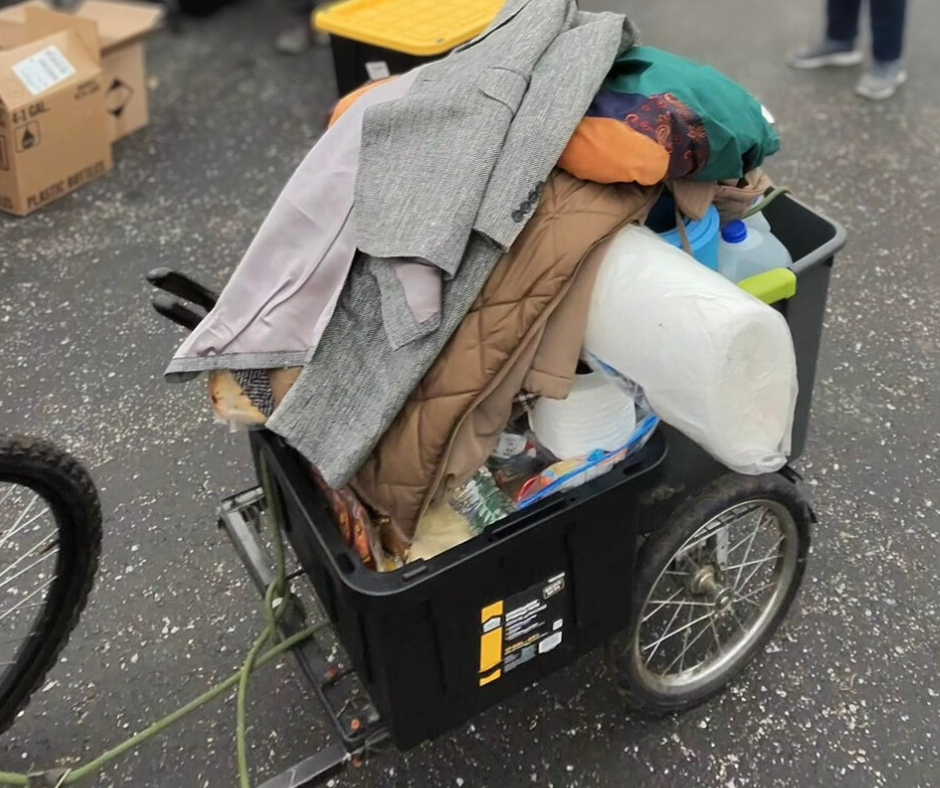
I couldn’t help but think of the neighbor. I know these people, and while they may be messed up, I think it’s more likely that one is stealing and then trading. We know this happens. Some people will take things they don’t need from us, for the purpose of bartering for what they want.
The next morning, I returned to camp. I have a propane tank in my truck. I’d lost count—maybe the fourth visit that week. It was early. Quiet. I found the sick man inside his tent. I’m not a medical person, but the rattle in his cough sounded bad. Exhausting. Violent. He’s refused multiple requests to see a doctor. A lot of people don’t want to check in anywhere.
“This isn’t any place for you to die,” I told him as I left.
On the way out, I was accompanied by a man who lives there, and as he was talking, my mind drifted—my foot hurt, my leg hurt, and I didn’t want to be there that morning. I feel defeated, abandoning a man to death. Walking past piles of discarded goods—things we and others had brought recently—hit me harder than usual.
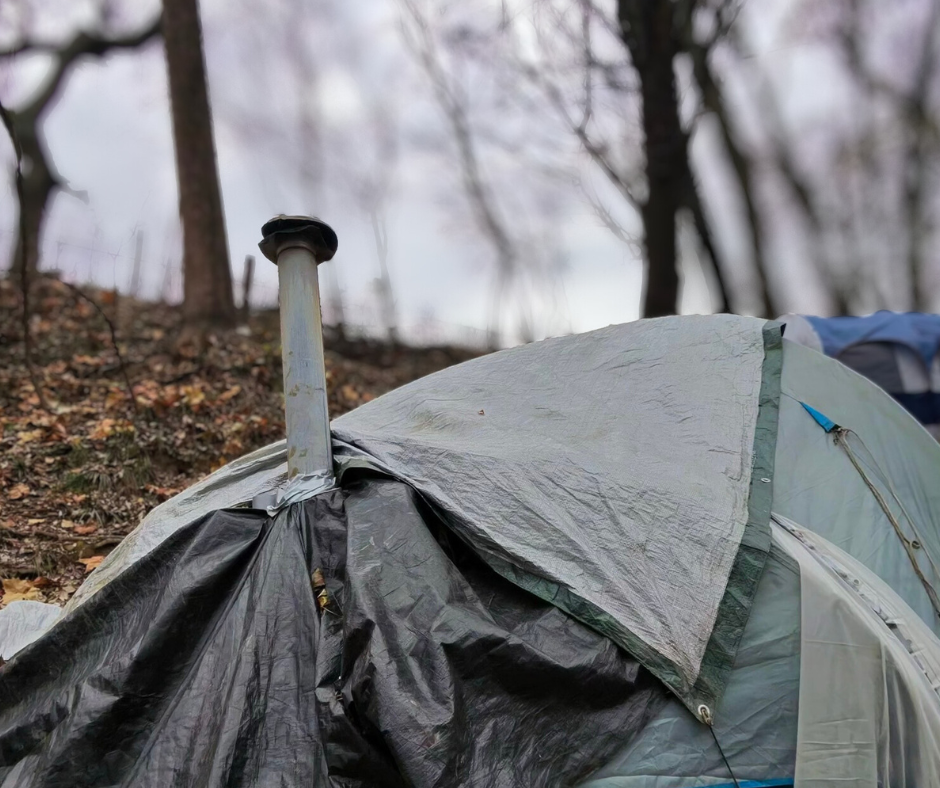
Then he casually mentioned that someone new had arrived without a tent. An eight-man tent, he said, would be ideal. There was a time, not long ago, that we struggled to get people into “a” tent. Sometimes it feels like they are expecting us to take orders and offering next-day delivery. This started out being a once-a-month thing.
Someone is complaining that they didn’t get what the front of camp had, since they live in the back. Another is now out of propane. Someone needs water. A man’s tent has a rip in it, and he wants another. A woman turns her back, and her belongings vanish. She and another resident are fighting over a tarp. The tent she got was too big. Another didn’t receive their Christmas gift, yet they really did. Rumor has it that some of them are upset that we didn’t bring enough of a specific commodity last week. And a pet required rescuing.
Yes, all of that actually happened.
My point in sharing all of this with you isn’t to gain your sympathy for all of my whining. I want to paint a picture that feels like you’ve put a lot of effort into helping, even to the point it hurts, and it’s never enough.
What we do in outreach is often accused of enabling the people we choose to serve, especially those in the camp. We hear from many people who believe that if they have chosen to live that way and refuse to get help, it’s on them. I can’t disagree with any of that. Those who feel that way and the people who live there can agree on one thing. If we were to stop what we do, especially suddenly, it would have an effect. Even if it’s just once a month.
We do this because they’re more like us than we’re comfortable admitting. The difference isn’t character. It’s cover. We live inside. We have locks, storage, savings, and distance. Our brokenness is better organized. When I shared all of that drama going on in camp, it sounded like chaos. When we hoard money, space, comfort, or control, we call it responsibility. When they argue over resources, it sounds ugly. When we do it, it sounds like policy.
Jesus was clear on what we are to do with the broken. No matter how bad we think they are, or if they continue to make bad choices. He met them where they were at. And we were instructed to do the same.
As of the day that I publish this, I have been boasting about how prepared we were to deal with the aftermath of another weather event. Like the ice and snow expected this weekend. Earlier today, I spoke with a community leader who said the camp’s residents had been asked to leave. That wasn’t the type of disaster we were thinking of.
They were forced from their previous location in July, which is why they’re where they are now. It’s a cycle. They’ll get dispersed, and we’ll lose them for a while. And there will be some we will not see again. Those remaining will eventually regroup, but it will take time.
And when that happens, if it’s God’s will, we will be there to help them rebuild.
Again.
By the way, the sick man. He made it.
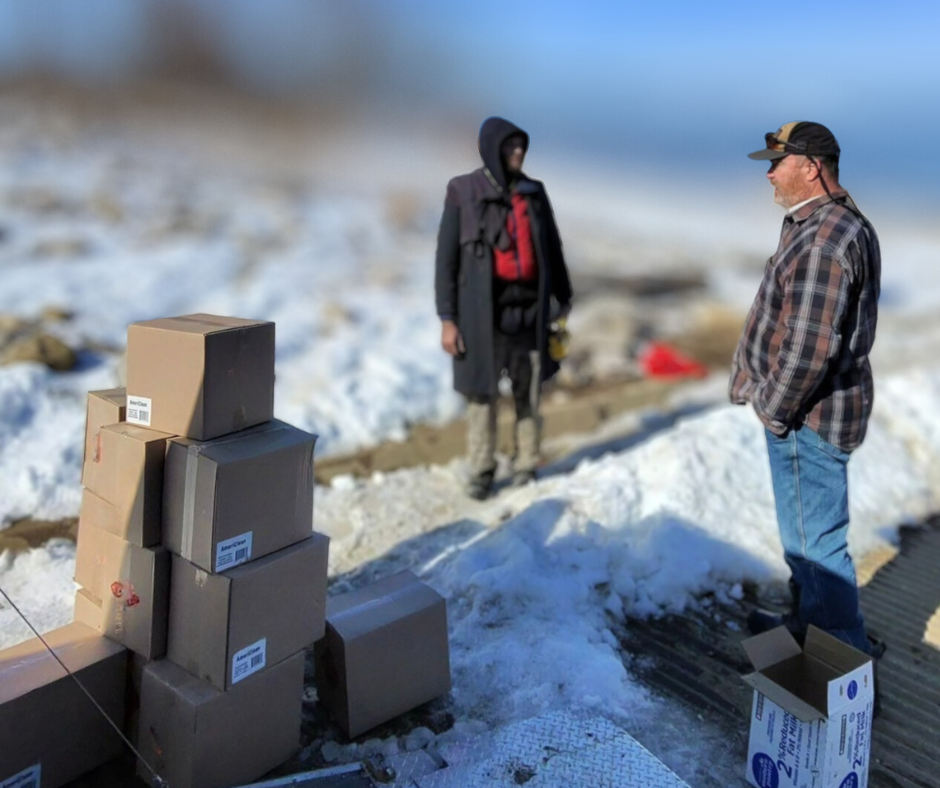
All of the real names used here were used with permission. Otherwise, the names have been changed. To protect the identity of those photographed, they have been blurred intentionally unless consent was given before publishing.
The Safer Kentucky Act, which went into effect on July 15, 2024, makes sleeping or camping in public areas illegal, including on sidewalks, roadsides, under bridges, or in parks, parking lots, garages, or doorways. The law creates a new offense called “unlawful camping” that can result in arrest and fines. Assisting those individuals is considered to be aiding and abetting, which is a legal doctrine that refers to the act of helping or encouraging someone to commit a crime. The person who aids and abets is generally held to the same degree of criminal liability as the person who commits the crime. We ask that you please not attempt to locate or visit Tent City.
Admirable writing. So many things can be right, wrong and true, at the same time. Its not easy.