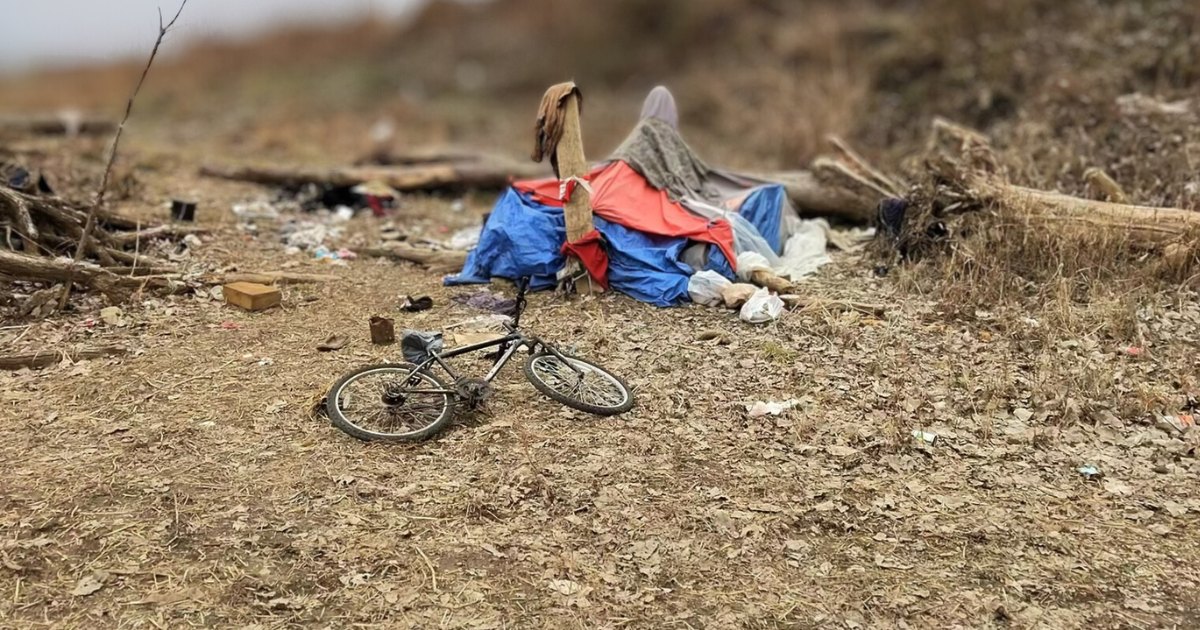
Summary: We almost did not have an outreach this month. Tent City was supposed to be wiped out, but wasn’t. An Easter meal served on the eve of what may be the clearing of camp.
Read Time: Seven Minutes
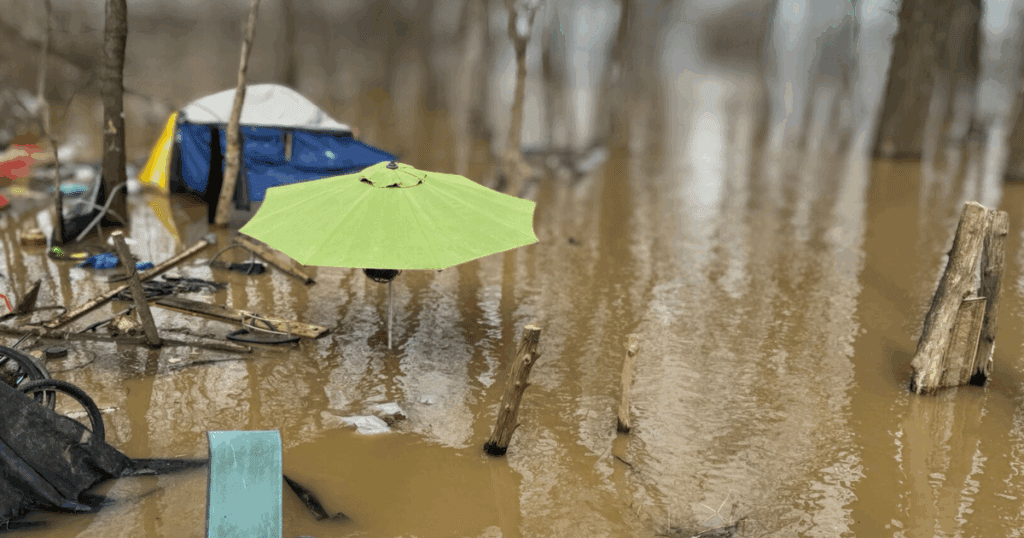
Tent City 2025 (Previous Location)
The rising water was supposed to solve the problem.
That way, nobody else would have to.
The people who live there had been previously asked to leave once the snow had melted. That time had passed. And there are those who were counting on the flood to remove all of the undesirable pieces of their lives from view.
It’s a natural, practical solution to a problem everyone wants to go away.
And that sounds harsh on the surface. But the truth is, it happens every year about this time. Last year, their previous camp was completely wiped away. I was there a couple of days before and returned after the water had receded. I’ve not been at the crash site of an actual jetliner before, but I think that’s what it looked like.
And while vilifying the property owner would make for a good read, I don’t believe they’re to blame. The people who live outside there are trespassing and breaking a law specific to “unlawful camping”. And while there’s no official confirmation, we are told by a reliable source that the property owner, who has turned a blind eye up until now, has received an ultimatum. Clean up your property or pay the consequences. Fines.
And while many of their homes were swept away, the waters did not reach the desired depth, and the catastrophic destruction we saw last year didn’t happen. Which leaves everyone in an awkward position, waiting to see who makes the first move.
A well-funded organization with a massive following walked into camp with good intentions, bringing gifts and a camera. They unknowingly stepped into a fragile ecosystem they didn’t fully understand, and documented everything “for awareness and accountability”, for the whole world to see. It was a literal online tour of the camp, revealing the locations of every incline, crossing, and turn one would need to take to visit.
Once something like that is pulled out of the shadows and placed in front of an entire town, it stops being something people can quietly ignore. The trash, the shelters, the mud, the tangled lives trying to survive there — it was all suddenly front and center. When that happens, it adds pressure to an issue already on the edge.
Honestly, I’ve been accused of misusing imagery. We try to be careful with the media we share, blurring landmarks and keeping locations as ambiguous as possible. But when I watched the footage they posted, I found myself wondering something uncomfortable: Is that how people feel when they see the media we put out?
The following day, we were at camp to replenish their supplies. Numerous residents reported that someone had been there earlier in the day and asked them to leave by a set time. Evidently, the source was unclear, with some saying it was law enforcement, others saying it was the landowner, and others saying it was our local government. One thing was universal. They were scared.
Another credible source spoke with a member of our local government, the type of person you’d expect to know about the matter. They had no knowledge of any action about to take place in the camp.
It’s just history repeating itself. This time last year, at a different location, unidentified men entered the camp and gave ultimatums. Nobody wanted to take responsibility. Not the property owner, nor the local government. And a few days later, I found myself in the same camp with the deep tire impressions left from heavy equipment, having scraped the face of the ground of their existence.
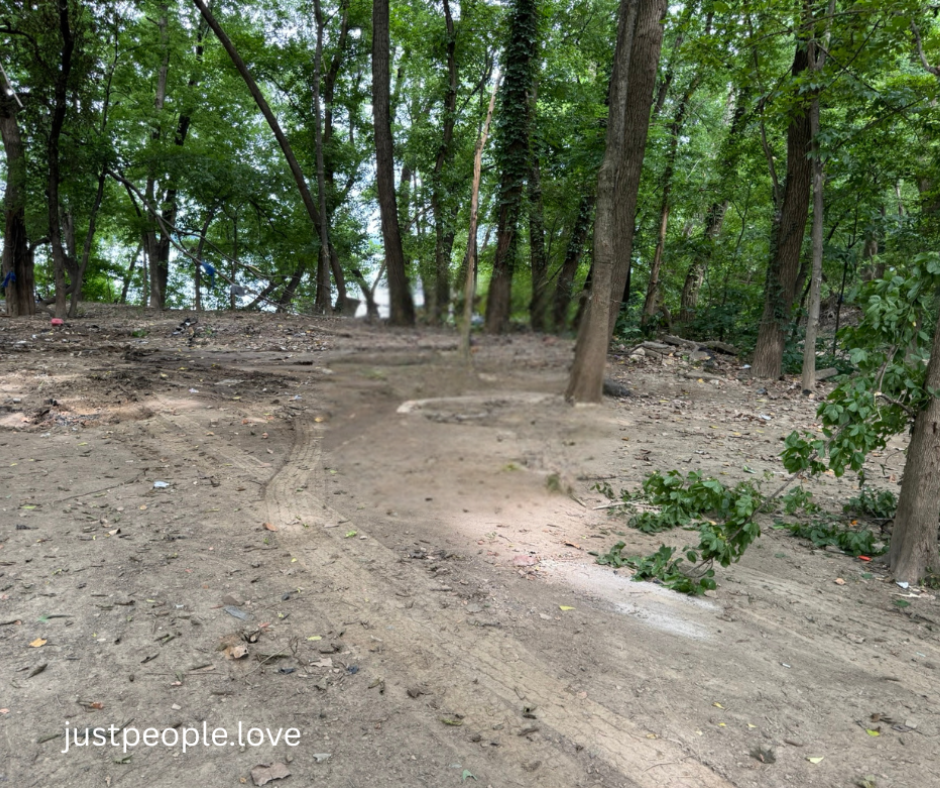
Tent City 2025 (Previous Location)
As I write this, it’s the eve of that deadline. Easter. My wife and I went into the camp earlier today to invite everyone to a nearby meal prepared by one of their advocates. Just like last time, no one is making preparations to leave. The mood was somber, but life there appeared to be going on as usual. I think anyone would ask, “Why aren’t they moving?”
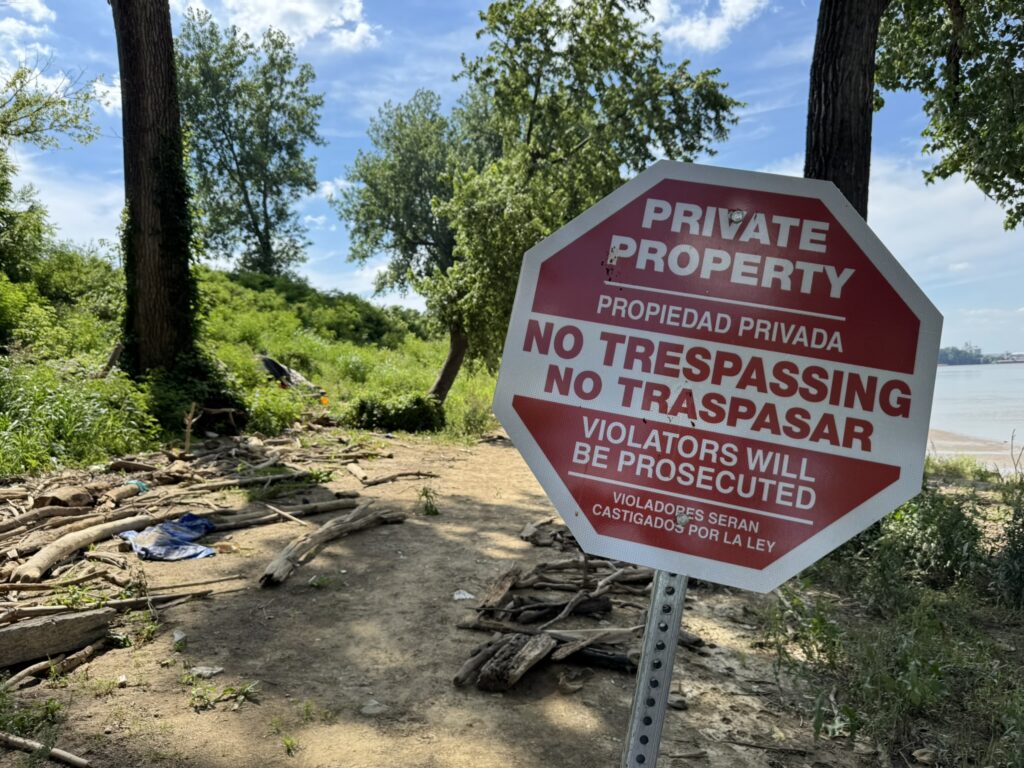
There’s nowhere to go. I personally covered the entire area a few days ago, and what hasn’t recently been enclosed with barbed wire fencing is now frequented by construction personnel working on a nearby project. I’m seeing new signage that wasn’t there before, making it clear to anyone reading it that they’re trespassing. To make matters worse, there’s little vegetation. Everyone is exposed right now.
We’ll see what happens tomorrow. I’ve seen ultimatums issued before; everybody freaked out, and then nothing happened.
I’m telling you, April has been a rough month. I didn’t think we were going to have an outreach. I guess I have been taking everyone’s generosity for granted and assumed the provisioning we needed would come in. It always does; all I have to do is just ask on social media, and it shows up. That didn’t work this time. As the delivery date drew near, we had nowhere near enough. So, I played a card I had kept reserved because of its shamefulness. I asked artificial intelligence to create an image of me, holding a sign begging for food, with an imaginary camp in the background.
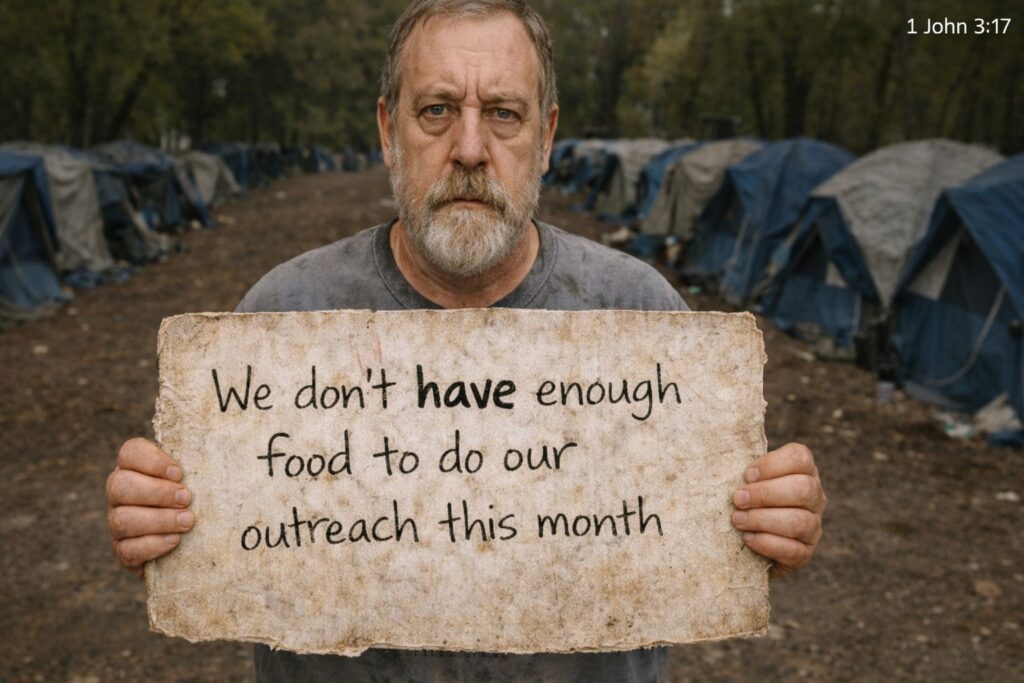
Facebook Post April 2025 (Created with AI using my image)
I posted it on social media. It hit the intended target, right in the heart. And donations poured in in the final hour. We barely had enough to give two of each item to around three hundred people. But when we unloaded that day, we came back with scraps. Which we hope means everyone who wanted something got it.
It feels dirty having to do that, make posts like that. I don’t like social media anyway, but it’s a necessary evil. Someone asked me why I don’t simply write down our needs on a napkin, take a picture of it, and post it for the world to see. And as much as I hate it, having tried every imaginable combination, that just doesn’t work. The numbers tell the story. A tent in the frame changes everything. I figure if I’m going to exploit anyone, it will be myself against a background that doesn’t really exist. It produces much-needed food for those who need it the most.
To be honest, I’ve photographed some intimate moments, some of absolute defeat and brokenness that I hope would be difficult for the average person to face. Nobody needs to see that. So, when people voice concerns over my sanitized portrayal of reality, I have to say to myself, “If you only knew.” Otherwise, our organization could draw quite a following at the expense of our hard-earned relationships built on trust. If you see a clear facial image in what we publish, chances are extraordinary that we talked about it first. More often than not, they want me to share their stories.
Like today, Stella asked me to share her story about the possibility of her losing her home tomorrow. That wasn’t planned; it just happened on the fly at the curb of a street.
And now, with the camp likely disappearing from this location, I realize something unsettling.
I don’t know what happens next either.
All of the real names used here were used with permission. Otherwise, the names have been changed. To protect the identity of those photographed, they have been blurred intentionally unless consent was given before publishing.
The Safer Kentucky Act, which went into effect on July 15, 2024, makes sleeping or camping in public areas illegal, including on sidewalks, roadsides, under bridges, or in parks, parking lots, garages, or doorways. The law creates a new offense called “unlawful camping” that can result in arrest and fines. Assisting those individuals is considered to be aiding and abetting, which is a legal doctrine that refers to the act of helping or encouraging someone to commit a crime. The person who aids and abets is generally held to the same degree of criminal liability as the person who commits the crime. We ask that you please not attempt to locate or visit Tent City.
You make it sound like someone was controlling the rising water. Clearly, no one but God controlled the water. If your objective is to advocate for those in need, why are you using theatrical content? Maybe take a look at Exodus 20:16.
While I cannot agree with you that it was implied that mankind can control the weather, we can agree that God is in control. Thank you for your contribution.