Summary: Stepping back from the front lines of camp leaves me asking what God is doing next. Meanwhile, young families begin knocking on doors, a concession stand appears out of nowhere, and even the reclusive Charlie finally speaks.
Read Time: Eight Minutes
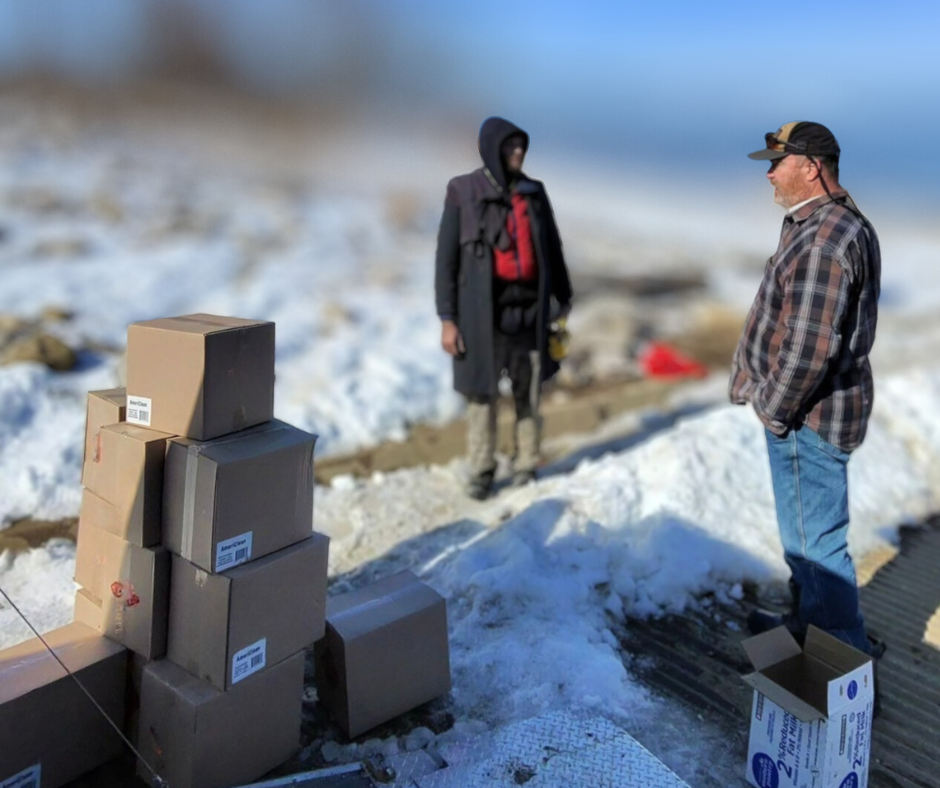
For those who don’t know, we go out on the last Saturday of every month and distribute food, hygiene supplies, coats, blankets, and other provisions that people like you donate to us. We start at the Cadillac Motel and then move on to English Park. Many of the people we serve live outside, some in their vehicles, and others are one step away from doing so.
On those Saturdays, when I pull into the parking lot beside the Cadillac Motel, it’s usually around 10:00 in the morning. Even though we don’t start serving until 10:30, there are always people waiting, hoping to be among the first in line for the best possible selection.
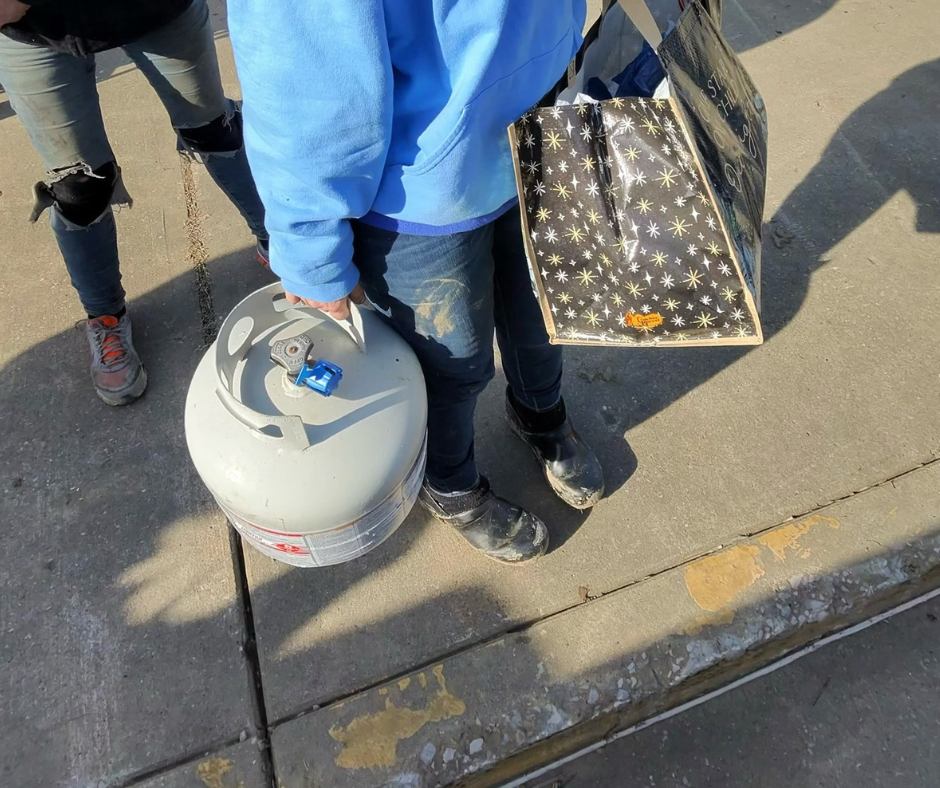
Many of them arrive pulling wagons.
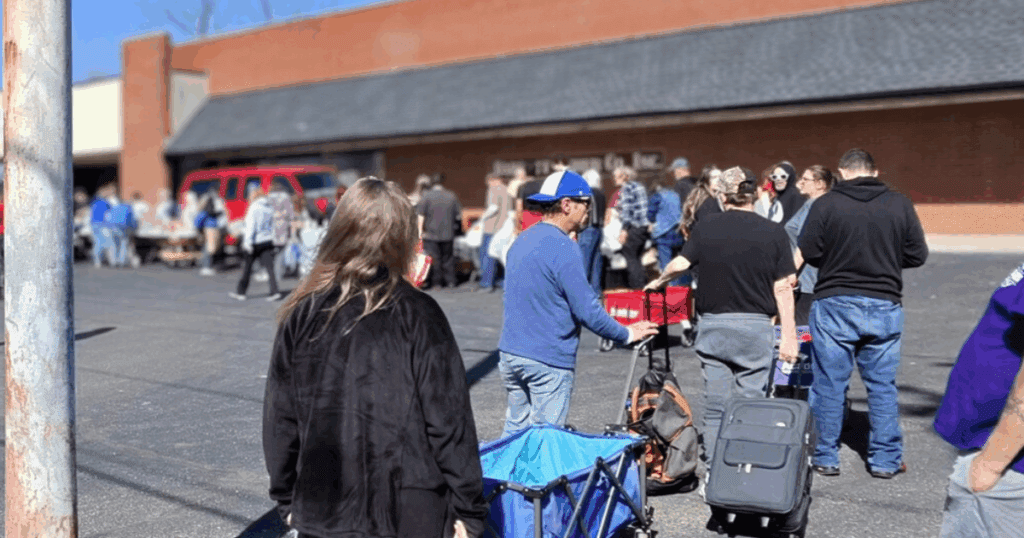
It’s a dignified act of desperation — walking away with everything you can.
By the time the tables are unloaded and stocked with provisions, the line has already spilled out of the parking lot and down Second Street. When the weather is favorable, as many as 300 people will take away more than 3,000 pounds of food.
When we’re doing outreach, I see a lot of familiar faces. But there are always new ones too. There’s always the one who seems desperate, asking permission for every item as if they’re not worthy.
And right behind them is someone who looks like they’re doing just fine… quietly stuffing rolls of toilet paper under their coat. When they don’t have to.
Having the privilege of standing in the middle of that exchange is not something I take lightly. Truth be told, I’m often more comfortable among the part of society nobody wants to acknowledge than the one I technically belong to.
It takes time—and a lot of consistency—to earn that kind of trust. The kind where people know you’ll be there.
At the motel, historically, knocking on doors has been my thing. But for several months now, a young man has shown up with his family. Early on, he noticed my limp and asked if he could take my place.
At first, that was difficult to accept. In the past, when I had shared the task with others, I wasn’t always convinced that every door was being visited. And if people were helping because I had inadvertently invited them into this work, then I felt like I should be the one taking the risk — knocking on a door where something potentially dangerous might be waiting behind it.
But he kept showing up. With his family.
At first, I watched from a distance. After seeing a few heartfelt moments with residents — watching him take the time to connect with people rather than simply move down the line — I realized something. It was one of those moments when you stop and recognize something unfolding before you. The way God places people where they’re supposed to be.
Since then, a couple living at the motel have accepted an invitation from this young man and his family to attend their church.
This is exactly what we had hoped for from the beginning. Raising awareness. Opening the door for others to become involved.
And evidently it’s working — or so says Charlie. Charlie has lived outside for over ten years now. During an interview with him by a videographer working on a documentary about our outreach, he talked about seeing an increase in the amount of help reaching the camp. Of course, that’s just one person’s opinion.
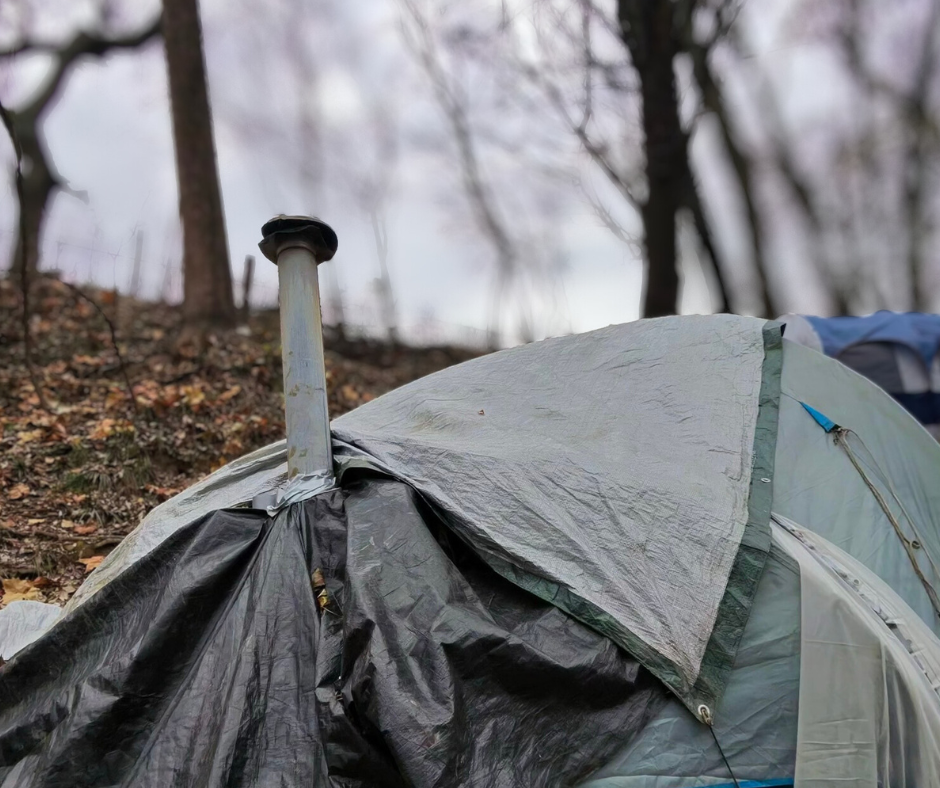
Up until recently, Charlie has always been guarded and elusive. I’ve only run into him a handful of times. He’s the kind of man who now refuses a tent, choosing instead to sleep on the ground beneath a tarp wrapped around the base of a tree.
But the last time I saw him, something had changed.
For the first time, his beard was trimmed. He looked clean. Somehow healthier than I remembered.
That’s because of a couple who recently moved into town specifically to minister to people living in the camp. They provide a place where residents can bathe, do laundry, and sleep when the weather becomes dangerously cold. It’s another example of people stepping into a need.
I remember the first time I met Charlie, back when Tent City was located somewhere else entirely. Camp was deep in the woods then. Remote. Hard to reach. Charlie had built something remarkable out there. A deck, as you might have behind your own house. There was an American flag ruffling in the wind, and the border of his place was marked with a fence he had artfully constructed from driftwood.\\
When he invited me past that boundary, it felt surreal. Like stepping into someone’s living room. It was fall. The air was perfect, the colors were changing, and the view stretched for miles. I’ll never forget that moment.
Looking back now, I think I might have been prideful during those early days. At times, I would walk into camp with the song “We could be heroes” playing in my head, because I thought we were the only ones doing it. Like it all revolved around me, as if I were “chosen”.
And in a way, that’s kind of how it was at their previous location. They were well isolated from our side of the world; it was as if they didn’t exist. This has its disadvantages when it comes to supplies. Our once-a-month outreach was a big deal for them, something they relied on much more than they do today. Not everyone was willing to cross the line and walk past that sign that says you’re trespassing. That left out a number of well-intended groups and individuals who have become acquainted with the community today.
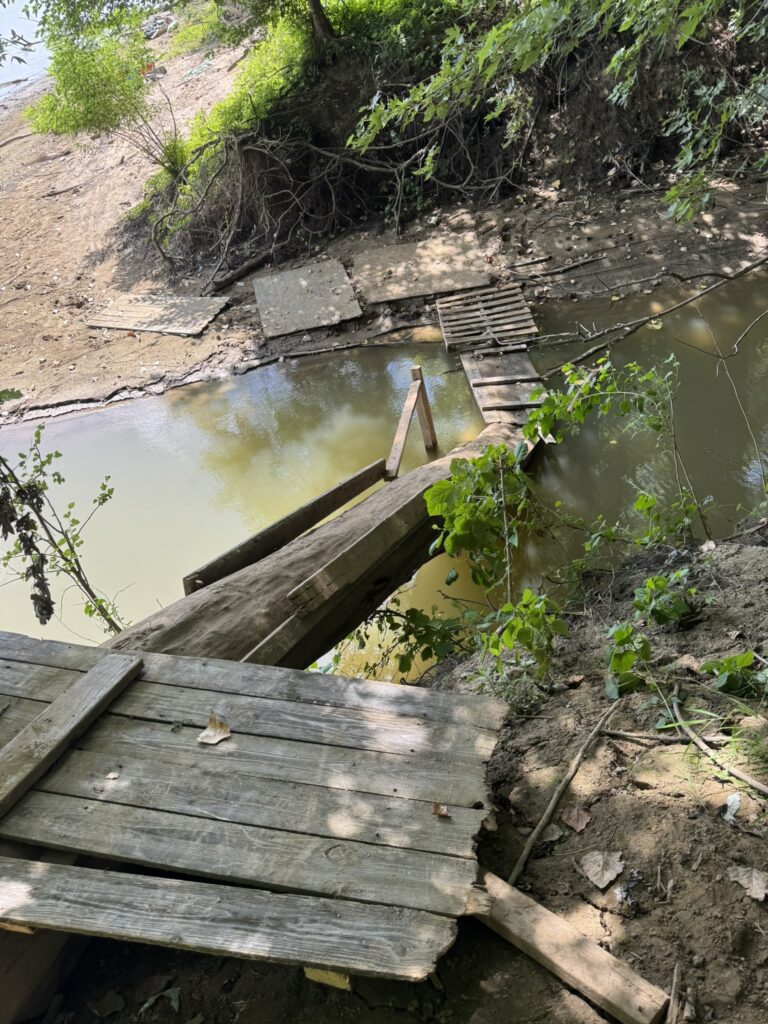
Uncertainty is the backbone of camp. There’s talk on social media of the city demolishing a nearby area for renovation into a lavish, upscale public park. The entity that owns the property the camp sits on has already asked them to move, amid the threat of rising waters. They’ve lived this fragile existence from one location to another for several years now.
People comment on how well-organized our outreach appears from the outside. But I promise you, that’s not the case. Here’s a good chaotic example. We’re setting up at the motel early that morning, when a car pulls up in the middle of things and unloads several large, very hot, covered two-handled pots. When I say hot, I mean the lady dropping off the pots provided oven gloves, and the handles still feel hot. I’m told it’s chili. And we placed them on the ground, in an asphalt parking lot. I don’t understand why, and I ask if a table wouldn’t be better. Someone assures me it’s being handled, and I go about unloading. The car drives away. Weird stuff like that happens all the time.
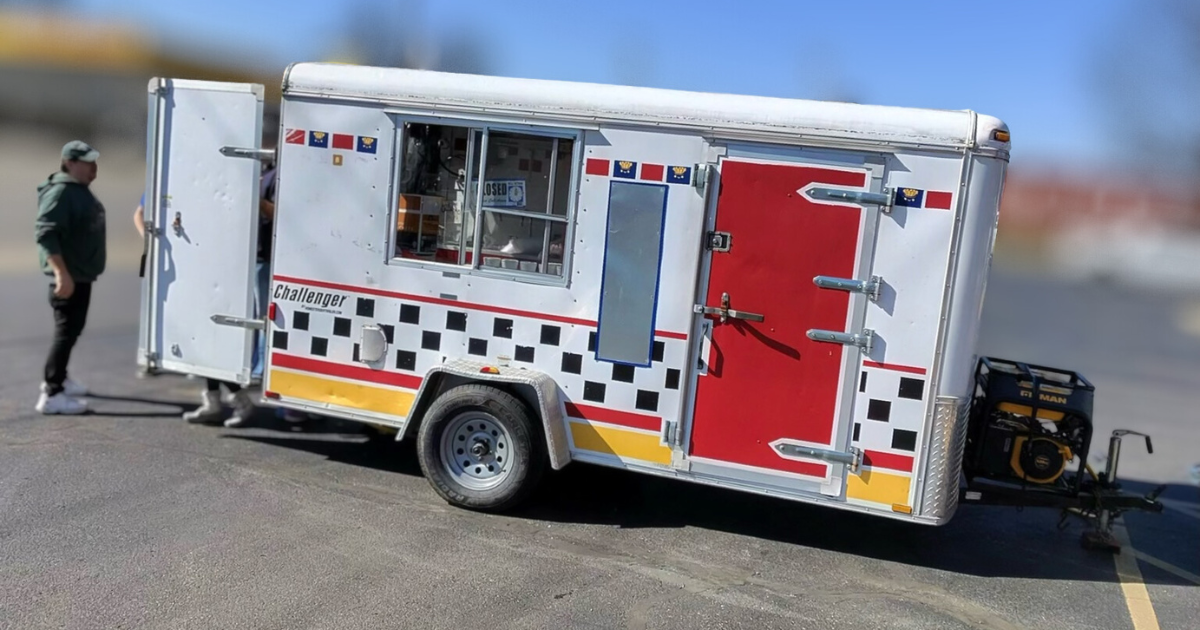
And then a truck pulling a concession stand on wheels pulls up and sets up shop right at the end of the serving line. These folks made tables and benches appear from nowhere for people to sit and enjoy their, of course, chili. It worked perfectly. After people were finished “shopping” for what they needed from our outreach, they were able to sit down with some dignity and enjoy a meal, with all the fixings. Those who prepared all of this treated the guests as if they were in a restaurant.
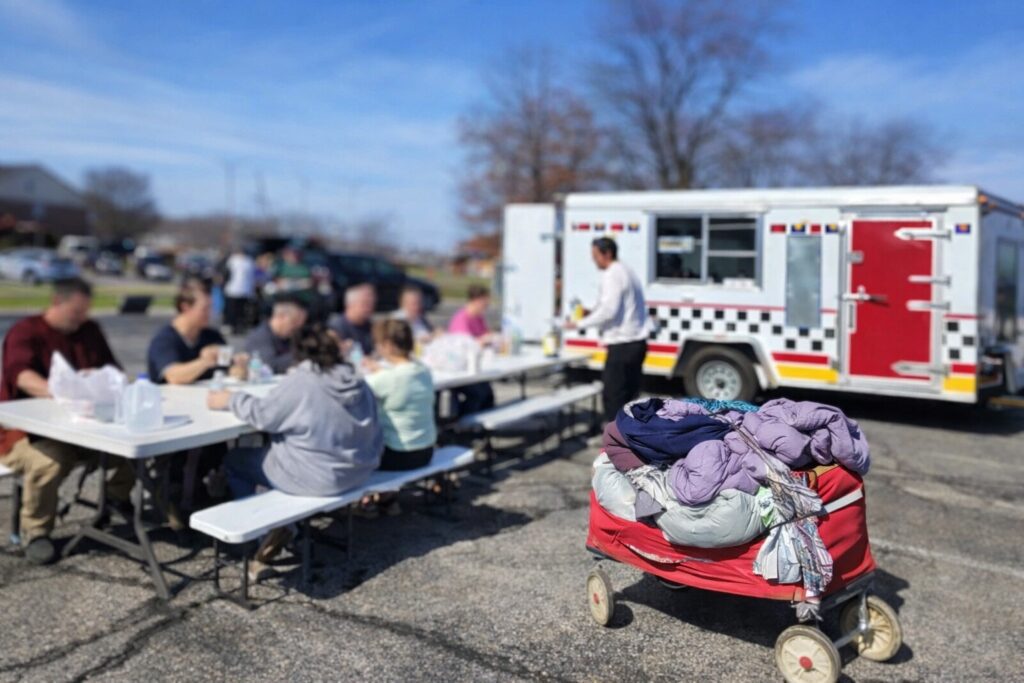
Later, my wife reminded me that this group had told us they would do this. And honestly, I usually let reports like this go in one ear and out the other. Most people have the best intentions when they commit, but don’t follow through. We all do that. But this group, they showed up in a way that said they meant business. And they want to do this regularly.
They are yet another couple, and their young family, from yet another church.
It’s another fulfillment of our dream. That concession stand had been idle for years. We’ve been quietly watching it. They took the time to metaphorically pick it up, dust it off, and put it back into service. Even earlier that morning, this young family had prepared a massive amount of food and ensured it was delivered piping hot and stayed that way thanks to an onboard generator. Seeing all that happen, to me, is the manifestation of love. That’s Jesus.
People are starting to show up for each other. A young family knocking on doors. A couple is opening their home. There’s someone helping those without identification obtain it so they can move forward in life. That same person is assisting one of the residents at camp in securing housing. Two individuals from different sources are teaming up to care for pets. There are regularly scheduled meals for those living outdoors during times of crisis, such as weather events.
None of that was planned. And that might be the most encouraging part of it all.
I sometimes wonder what else there is for us to do besides showing up once a month with a truck full of supplies. I’m not able to negotiate those steep inclines, the relentless rocks, and the mud that makes it feel like gravity got really friendly all of a sudden. Not like I could before.
It almost feels like I’m not needed in the same way that I was before.
What a familiar spot to be in. You ask God, “What now?” And all you get are crickets.
All of the real names used here were used with permission. Otherwise, the names have been changed. To protect the identity of those photographed, they have been blurred intentionally unless consent was given before publishing.
The Safer Kentucky Act, which went into effect on July 15, 2024, makes sleeping or camping in public areas illegal, including on sidewalks, roadsides, under bridges, or in parks, parking lots, garages, or doorways. The law creates a new offense called “unlawful camping” that can result in arrest and fines. Assisting those individuals is considered to be aiding and abetting, which is a legal doctrine that refers to the act of helping or encouraging someone to commit a crime. The person who aids and abets is generally held to the same degree of criminal liability as the person who commits the crime. We ask that you please not attempt to locate or visit Tent City.
0 Comments